
Today’s market offers a wide range of chemical-resistant gloves in different designs and materials, suitable for various working environments. Thien Bang has compiled the top 5 best-selling chemical-resistant gloves in 2026 to help you easily compare and choose the right product for your needs.
What are chemical-resistant gloves?
Chemical-resistant gloves are protective gloves designed to protect the hands from direct contact with chemicals during work. They are commonly used when handling acids, bases, solvents, oils, grease, detergents, and various other chemicals.
Depending on the type of chemical, gloves are made from different materials with specific chemical resistance properties. Therefore, choosing the right gloves for the chemicals and working environment is essential to reduce the risk of skin irritation, chemical burns, and skin damage while ensuring user safety.
Benefits of using chemical-resistant gloves at work
Protecting workers’ health and safety
- Help prevent chemical burns, contact dermatitis, and acute poisoning.
- Reduce the risk of occupational diseases caused by long-term chemical exposure, including liver, kidney, and nervous system problems.
- Minimize injuries caused by solvents, acids, alkalis, or toxic substances coming into contact with the skin.
Improving work performance and confidence
When hands are properly protected, workers can handle tasks more accurately and confidently, helping improve productivity and reduce errors during work processes.
Reducing medical and compensation costs
Providing the right chemical-resistant gloves can help businesses reduce accidents, medical expenses, sick leave, compensation costs, and disruptions to production.
Complying with regulations and international standards
Many occupational safety regulations and standards, such as OSHA, ISO, EN 374, and EN 388, require appropriate personal protective equipment for specific working environments. Providing the right gloves helps businesses improve workplace safety and reduce risks during production.
Top 5 best chemical-resistant gloves today
Below are 5 types of chemical-resistant gloves that are highly rated based on criteria such as durability, resistance to permeation, chemical resistance, flexibility, and suitability for different working environments.
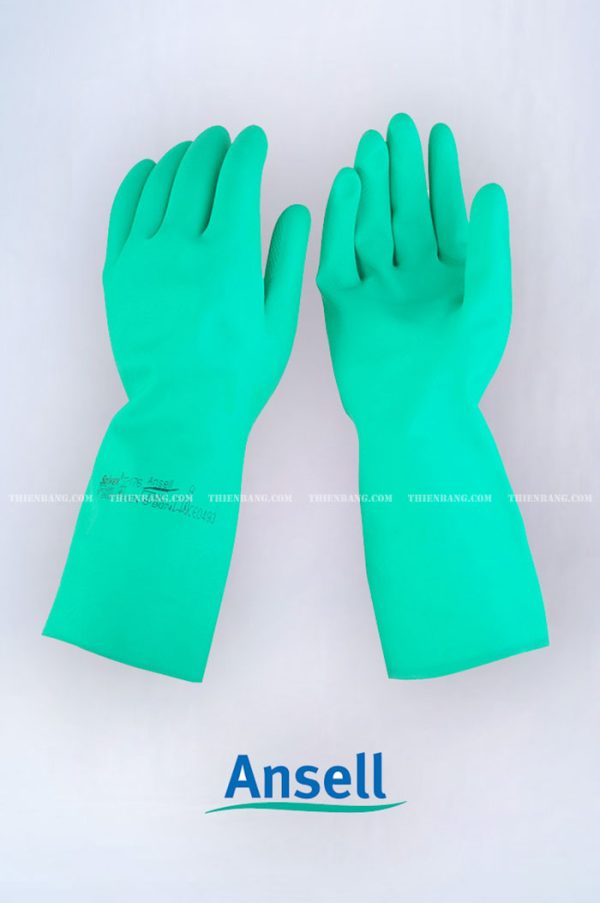
Ansell AlphaTec / Solvex – Nitrile
- Material: High-quality nitrile with resistance to oils, solvents, and many common chemicals.
- Advantages:
- Good chemical and liquid resistance in many working environments.
- Resistant to abrasion and punctures, suitable for a wide range of tasks.
- Some versions feature a liner for greater comfort during use.
- Certain products meet EN ISO 374 and EN 388 standards.
- Disadvantages: Not the best choice for all strong aromatic solvents, such as xylene and toluene.
- Applications: Laboratories, manufacturing, industrial cleaning, painting, and printing.
Butyl gloves
- Material: Butyl rubber.
- Advantages:
- Excellent resistance to many ketones, esters, and strong organic solvents.
- Thick and durable, suitable for environments with a high risk of chemical exposure.
- Disadvantages: Generally more expensive than nitrile gloves and less flexible than some thinner glove types.
- Applications: Chemical laboratories, industrial painting, cleaning, and environments involving hazardous chemicals.
 .
.
Natural rubber gloves (Latex)
These gloves are made from natural rubber latex. They offer high elasticity, fit closely around the hands, and are commonly used to protect hands from mild chemicals or diluted solutions.
- Advantages: Flexible, highly elastic, close-fitting, and easy to handle.
- Disadvantages: Not resistant to strong organic solvents and may cause allergic reactions in some users.
- Applications: Laboratories and handling mild chemicals.

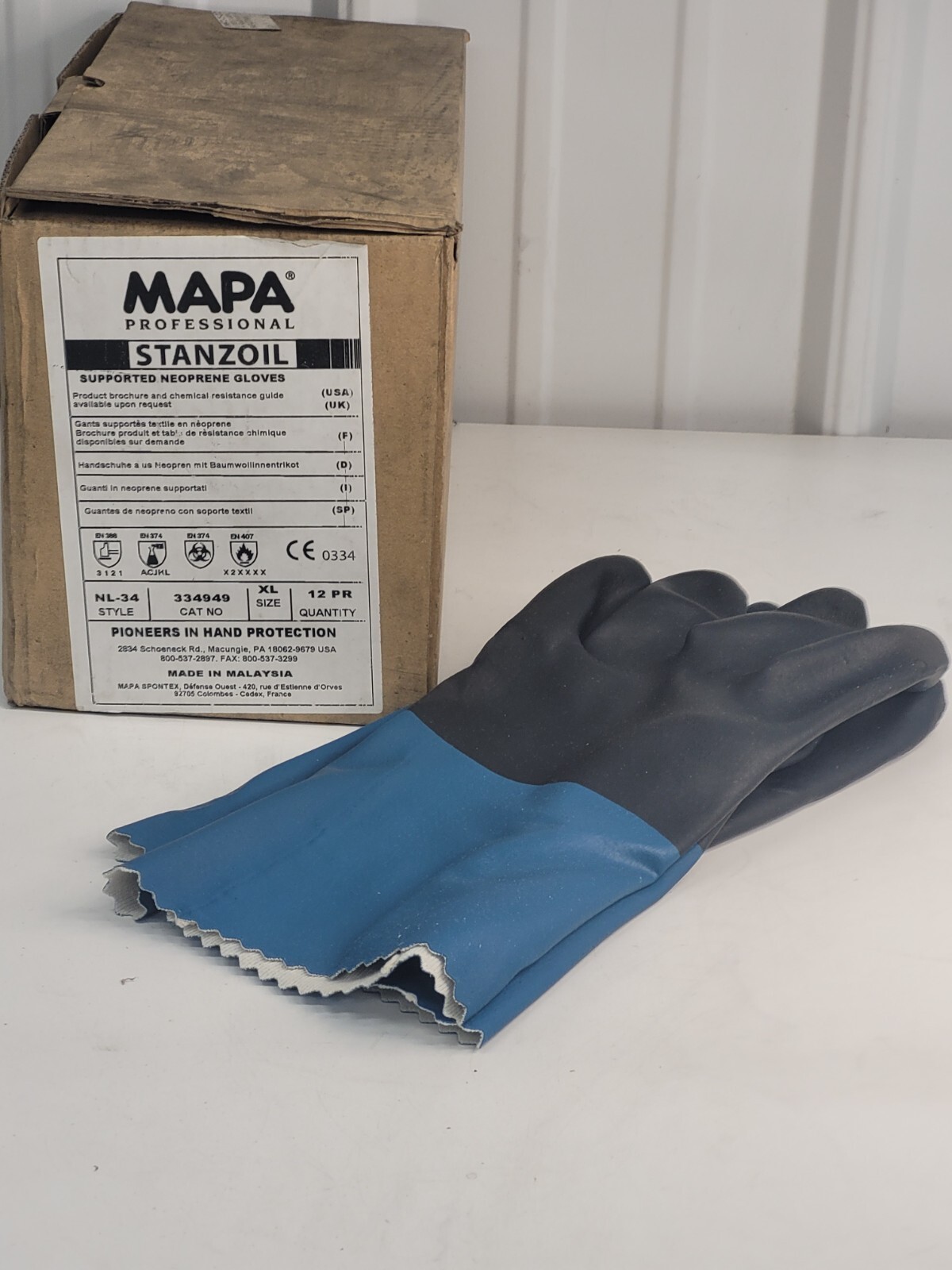
Neoprene – Showa, MAPA Stanzoil
- Material: Neoprene synthetic rubber.
- Advantages:
- Resistant to many acids, alkalis, oils, and cleaning solutions.
- Soft and flexible, allowing easier handling and manipulation.
- Disadvantages: Resistance to certain strong aromatic solvents may be limited.
- Applications: Industrial cleaning, food processing, cosmetics, and some chemical-handling tasks.
Industrial PVC / Vinyl gloves
- Material: Polyvinyl chloride (PVC) or flexible vinyl.
- Advantages:
- Affordable and suitable for environments involving dilute acids and salt solutions.
- Easy to clean and suitable for wet working conditions.
- Disadvantages: Limited resistance to many organic solvents and low temperatures.
- Applications: Wastewater treatment, food processing, agriculture, and environments involving mild chemicals.

Things to consider when choosing chemical-resistant gloves
Identify the type and concentration of the chemical
Different gloves provide different levels of resistance to different chemicals. Therefore, before choosing, it is important to clearly identify the type of chemical and exposure concentration. Based on this information, you can determine the appropriate glove material and choose a product that provides the required level of protection. It is recommended to consult the manufacturer’s Chemical Resistance Chart to check the resistance of each type of glove.
Consider the duration of chemical exposure
The length of time workers are exposed to chemicals also affects the choice of gloves.
- Short-term exposure or splashes: Thin, lightweight, and flexible gloves may be suitable for easier handling.
- Frequent or prolonged exposure: Choose gloves with greater thickness and chemical resistance that are suitable for the working conditions and exposure time.
Consider glove thickness and size
- Thickness: Thicker gloves are suitable for tasks requiring a higher level of protection or frequent chemical exposure, while thinner gloves are more suitable for tasks requiring flexibility and precise handling.
- Size: Choose gloves that fit your hands properly. Gloves should not be too tight, as this can cause discomfort and restrict blood circulation, or too loose, as they may slip off and make handling difficult.
Check glove standards
Before purchasing, check the standards of the gloves to ensure that the product is suitable for the working environment:
- EN ISO 374: Standard for protective gloves against chemicals and microorganisms.
- EN 388: Standard for protection against mechanical risks such as abrasion, cutting, tearing, and puncture.
- FDA: May apply to certain products intended for use in the food industry.
Where to buy chemical-resistant gloves?
There are many types of chemical-resistant gloves from well-known brands available on the market, with a wide range of prices. Thien Bang has many years of experience in the occupational safety industry and provides customers with genuine, high-quality products at reasonable prices.
Hotline / Zalo:
- Northern Vietnam: 0981.056.066 – 0961.203.270
- Southern Vietnam: 0966.831.477 – 0986.720.134