
Safety harness are commonly used in various jobs where there is a risk of falling. Among them, full-body and half-body safety harness are two commonly used types. So, what are the characteristics of these two harnesses, and how do they differ? Let’s explore the details with Thien Bang below.
What is a half-body safety harness?
A half-body safety harness (also known as a waist safety belt) is a type of personal protective equipment designed to fit around the user’s waist and hips. When working at height, the harness is connected to a secure anchorage point to help limit the risk of falls.
In terms of construction, this type of harness has a relatively simple design, including:
- A wide strap that wraps around the waist.
- A safety buckle system for secure fastening.
- Metal connectors, typically made of steel, for attachment to a safety line or anchorage point.
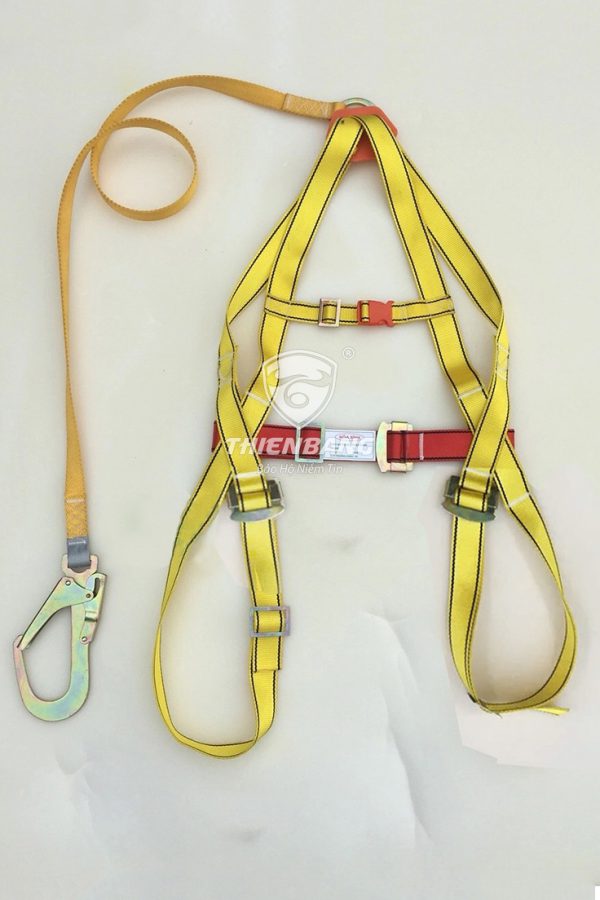
Advantages
- Lightweight and easy to use: The user only needs to wrap the harness around the upper body, adjust the buckle, and connect the anchorage hook without spending much time putting it on.
- High flexibility: Its simple design allows users to bend, turn, and move more easily in confined spaces.
- Cost-effective: It is significantly less expensive than a full-body safety harness, making it a suitable option for temporary work or short-term use.
Disadvantages
- Limited protection: In the event of a fall from height that leaves the worker suspended, the force may be concentrated around the chest and abdomen rather than being evenly distributed. Prolonged suspension can increase the risk of internal compression, breathing difficulties, or spinal injuries.
- Limited suitability for certain work environments: It is not suitable for work at significant heights, high-rise construction sites, or areas with a high risk of falls.
- Limited support features: Most half-body harnesses do not have thick shoulder or back padding, which can cause fatigue or discomfort when worn or when maintaining a suspended position for extended periods.
What is a full-body safety harness?
A full-body safety harness is a type of personal protective equipment designed to cover and secure the user’s upper and lower body, including the shoulders, chest, back, hips, and thighs. It is widely used for work at height, helping distribute the forces generated during a fall across the body more evenly.
A standard full-body safety harness typically includes:
- Shoulder and chest straps: Help keep the body upright and reduce the risk of the user tipping over while suspended.
- Hip and thigh straps: Secure the lower body, support the user’s weight, and help distribute fall-arrest forces.
- Adjustment buckles: Allow the user to loosen or tighten the straps for a secure and comfortable fit.
- Connection points (D-rings): Usually positioned on the back or chest for connecting to a shock-absorbing lanyard and a secure anchorage point.

Advantages
- Enhanced safety: In the event of a fall or when a worker is suspended, the forces are distributed across the shoulders, chest, and thighs, helping reduce localized pressure on the body.
- Comfortable for extended use: With shoulder and thigh padding and adjustable buckles, users can wear the harness for several hours with less discomfort and muscle fatigue.
- Helps prevent tipping and maintain body position: A full-body harness helps keep the user upright or safely reclined, supporting normal breathing while waiting for rescue.
- Versatile features: Many models include back and shoulder padding, tool attachment points, and designs suitable for various industries, including high-rise construction, window cleaning, telecommunications installation, and electrical work.
Disadvantages
- Bulkier and takes longer to put on: With more buckles and straps around the thighs and shoulders, putting on and removing a full-body harness takes more time than using a half-body harness.
- May somewhat limit mobility: The full-body design can feel restrictive or warm, particularly when working in hot weather or confined spaces.
- Higher cost: Full-body harnesses are generally considerably more expensive than half-body harnesses.
Comparison table: half-body vs. full-body safety harnesses
| Comparison criteria | Half-body safety harness | Full-body safety harness |
| Protection coverage | Wraps around the upper body, mainly the waist, abdomen, and hips; features a simple design with a wide strap. | Covers the body from the shoulders, chest, and back to the hips and thighs, with an adjustable strap and padding system. |
| Safety level | Moderate: Fall forces may be concentrated around the abdomen and chest, potentially increasing the risk of injury during prolonged suspension. | Enhanced: Distributes fall forces across the shoulders, chest, hips, and thighs, helping prevent the body from tipping and supporting a more stable position during suspension. |
| Comfort | Lightweight and compact, allowing users to bend, turn, and move more easily in confined spaces. | Bulkier and may feel somewhat restrictive at first, but shoulder and thigh padding can provide greater comfort during extended use. |
| Applications | Suitable for certain lower-risk work situations where movement is limited and secure working platforms are available. | Commonly used for work at height and in locations where there is a significant risk of falling. |
| Cost | More economical and generally less expensive. | Generally more expensive due to its more complex design and additional protective features. |
When should you use a half-body safety harness?
A half-body safety harness may be used when working at low or moderate heights in relatively stable environments, such as on secure scaffolding or work platforms with protective guardrails. It can be suitable for short-duration tasks that require frequent movement, bending, or turning. Examples include:
- Wall painters, carpenters, or interior installation workers working on low scaffolding indoors.
- Maintenance and repair technicians working in areas with secure standing platforms or work floors.
- Certain short-distance emergency rescue tasks where rapid movement and access to the person in need are required.

When should you use a full-body safety harness?
A full-body safety harness is generally required for work at heights where there is a significant risk of falling, particularly when working on unstable structures, without a secure work platform or protective guardrails, or where a free fall could occur. Examples include:
- Construction workers carrying out formwork, concrete pouring, or steel reinforcement installation on high-rise buildings.
- Window cleaners and façade painters working on building exteriors while suspended by ropes (rope access).
- Electrical workers climbing high-voltage poles or towers, as well as technicians installing or maintaining telecommunications base stations (BTS).
- Workers operating on sloped roofs, steel structures in factories, or oil and gas drilling platforms.
Authorized distributor of genuine safety harness
Both full-body and half-body safety harnesses play an important role in protecting workers when working at height. However, each type has a different design and range of applications, so businesses and workers should consider the specific requirements of the job when choosing the appropriate product.
With many years of experience in supplying personal protective equipment, Thien Bang offers a wide range of full-body and half-body safety harnesses from brands such as 3M, SSEDA,…, along with various other protective equipment. At Thien Bang, you can expect:
- Professional consultation based on your industry and working environment.
- Genuine products with clear labels and relevant CO/CQ documentation.
- Competitive prices with a wide range of options for individuals and businesses.
- Dedicated support, from product consultation to fast delivery.
Thien Bang not only supplies protective equipment but also works alongside businesses to provide suitable safety solutions for their workers.
Contact Thien Bang today for advice on choosing the most suitable full-body or half-body safety harness for your specific work requirements.
Hanoi office: 0981.056.066 – 0961.203.270
Ho Chi Minh City office: 0966.831.477 – 0986.720.134