
Most construction activities require workers to operate at heights, carrying potential risks of dangerous falls and severe injuries. Therefore, a construction safety harness is an indispensable protective equipment, acting as the ultimate “shield” to protect human life. Join Thiên Bằng to learn in detail about popular types of harnesses, technical usage principles, and effective equipment maintenance methods right below.
Types of construction safety harness
Currently, various safety harnesses are designed for different needs. However, when working on-site, it is best to prioritize popular types suited to the specific job characteristics as follows:
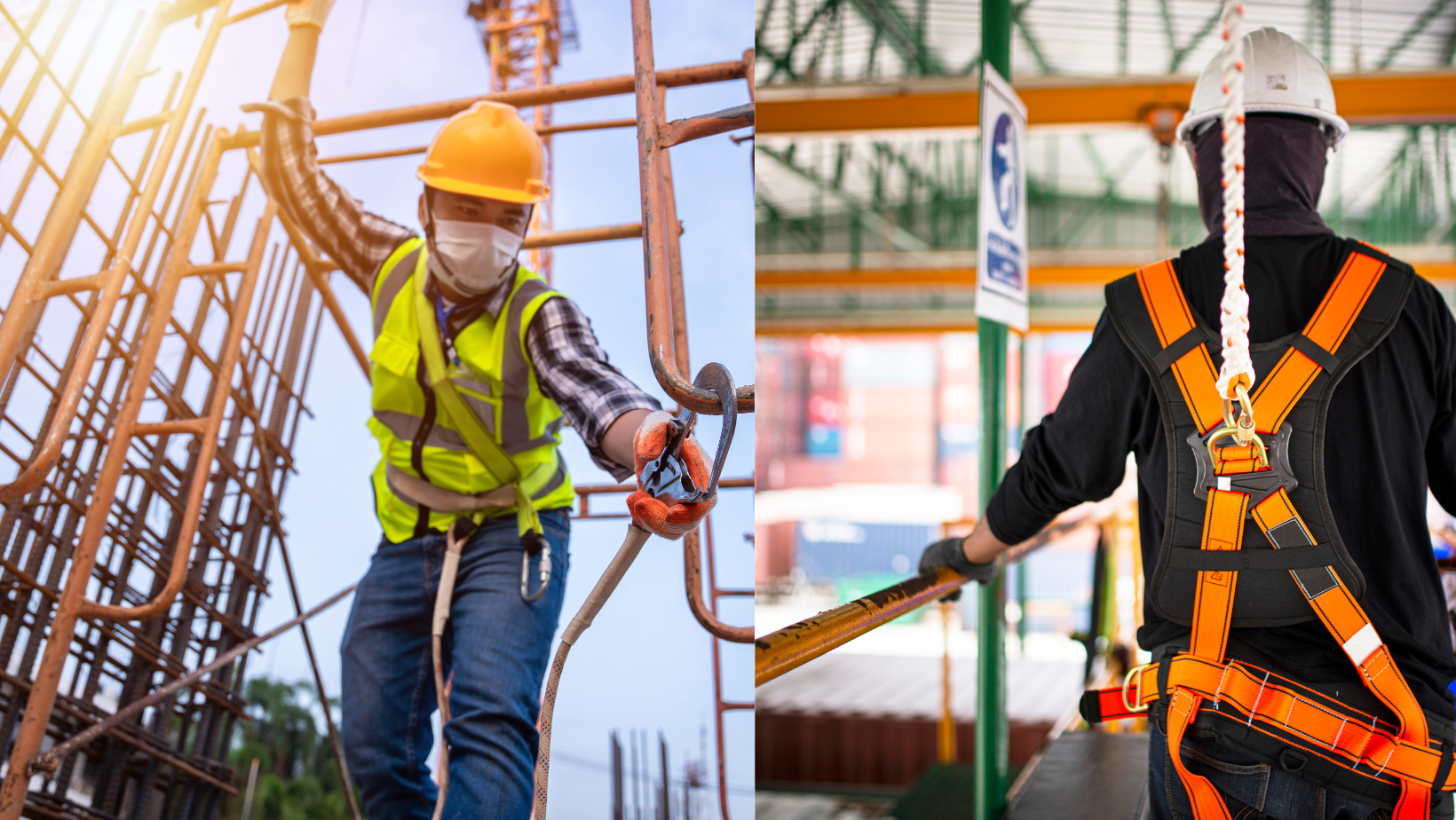
- Full-body safety harness: Suitable for working positions at heights of 2 meters or more (such as scaffolding areas, steel structures, and floor/wall concrete pouring). The design wraps evenly around the body to distribute impact force and prevent spinal fracture risks in the event of a fall.
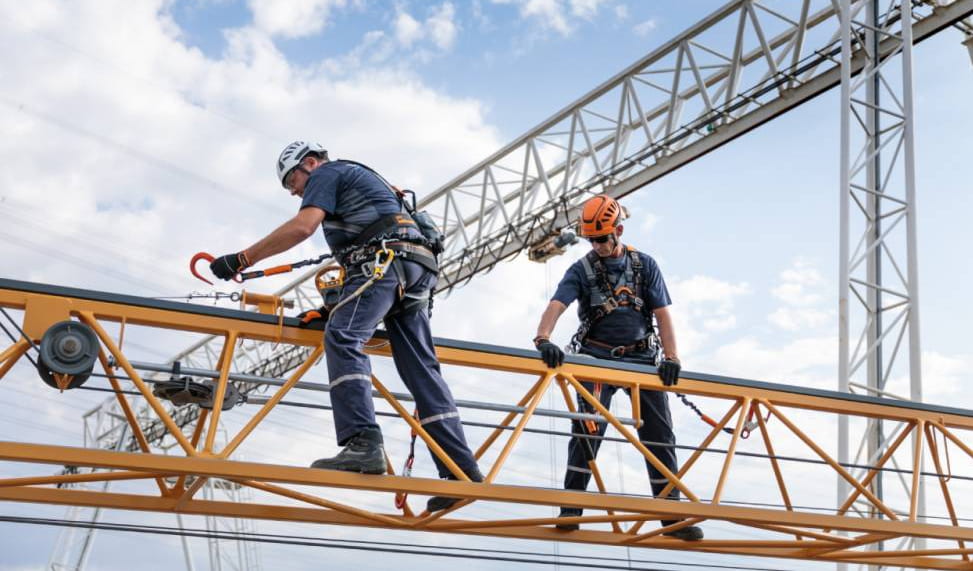
- Full-body safety harness with shock absorber: Specifically designed for high-altitude work areas from 4 to 6 meters and above (such as factory roofs, bridge girders, and high-rise buildings). It comes with a built-in shock-absorbing lanyard designed to tear gradually to dissipate sudden pulling forces when a worker falls from a height.
- Half-body safety harness (waist belt): Suitable for low-height or fixed-standing work positions (such as electricians climbing low utility poles or assemblers working on sturdy platforms). This product functions to maintain a stable standing position and must never be used for free-fall arrest at great heights.
- Heat-resistant safety harness (fire retardant): Aimed at high-temperature working positions such as overhead welders and metal cutters. The product uses special materials capable of withstanding molten welding slag, thoroughly preventing the risk of the harness burning or breaking during operation.

Principles of using construction safety harness
- Anchor at a high point: The anchorage point (snap hook) must be secured at chest level or higher than the worker’s head to minimize the free-fall distance as a target. It is strictly prohibited to anchor the line at foot level or lower than the standing platform to avoid increasing dangerous pulling forces in the event of an incident.
- Adjust the harness to fit snugly and balance the body: Before going up to heights, workers must wear and tighten the adjustment buckles so that the harness fits snugly around the body (not too loose to prevent slipping out during a fall, nor too tight to restrict blood circulation). In particular, the thigh and chest straps must be securely fastened to ensure that when a fall occurs, the impact force is evenly distributed across the body, preventing internal organ or spinal injuries.
- Do not arbitrarily extend or disassemble accessories: Absolutely do not use ordinary ropes, cables, or hooks of unknown origin to arbitrarily extend the safety line. All replacement accessories and connectors must be compatible and meet the manufacturer’s technical standards, as arbitrary extension will alter the fall distance and impact force during an accident.
Maintenance and periodic inspection guidelines
Proper maintenance will help extend the lifespan and ensure that the construction safety harness always remains ready to protect workers:
- Cleaning after use: Clean off dirt, mud, or cement clinging to the equipment using warm water and neutral soap. Never dry it directly under harsh sunlight or use high-temperature dryers.
- Proper storage: Hang or store the construction safety harness in a dry, well-ventilated area away from corrosive chemicals, heavy oils, and major heat sources.
- Periodic inspection: In addition to a quick inspection before each work shift, the equipment must be thoroughly inspected by a qualified professional (safety officer) at least every 3 to 6 months and recorded in a tracking log.
Conclusion
Selecting and correctly using the right construction safety harness will help workers stay confident and secure in every elevated construction task. If you are looking for quality-certified safety harnesses, fall arrest lanyards, and protective equipment, Thiên Bằng is ready to provide a diverse range of construction PPE solutions to help businesses enhance occupational safety efficiency in any working environment.
Contact us immediately for detailed consultation!
Hanoi office: 0981.056.066 – 0961.203.270
Ho Chi Minh City office: 0966.831.477 – 0986.720.134