
Many workers wonder when to replace the safety harness to ensure their safety when working at heights. In this article, Thien Bang explains the warning signs that indicate when a safety harness should be taken out of service and replaced to help prevent potential accidents.
Signs you need to replace the safety harness
First, the safety harness has been subjected to a fall. Even if it appears intact, the load-bearing webbing and internal shock-absorbing system may have stretched or sustained hidden damage due to the extreme force generated during a fall. The harness must not be reused.
Second, the harness is torn, frayed, or has broken stitching. Even a small cut, fuzzy or worn webbing caused by friction, or damaged load-bearing seams can significantly reduce the strength of the harness.
Third, the harness has deteriorated due to chemical exposure or high temperatures. Contact with acids, solvents, or other chemicals can cause the webbing fibers to become brittle or stiff. Exposure to welding sparks or intense heat can also cause scorching and fiber shrinkage, compromising the harness’s load-bearing capacity.
Fourth, the buckles, D-rings, and metal components are damaged. Metal parts that are bent, cracked, loose, improperly secured, or severely corroded may fail under sudden loads, potentially causing hooks to break or buckles to release.
Fifth, the harness has exceeded its service life. Using a harness beyond the period recommended by the manufacturer (often 5 to 10 years from the date of manufacture, depending on the product) can be dangerous because synthetic materials deteriorate naturally over time and may become brittle or weakened, even if the harness still looks new.
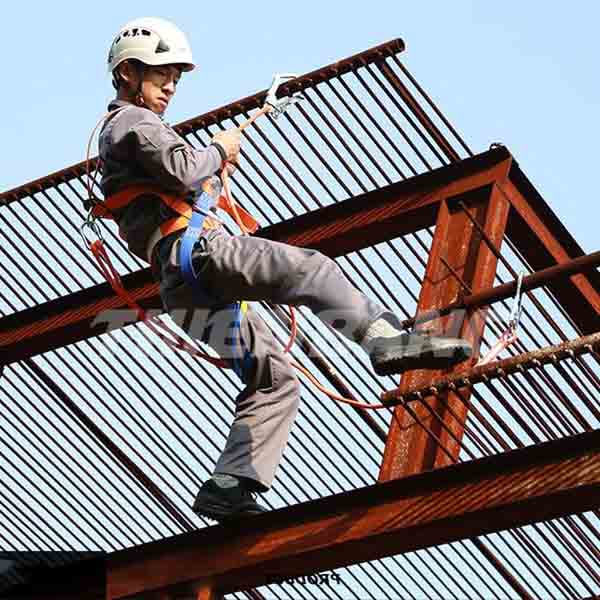
Periodic inspection frequency for safety harnesses
To ensure safety when working at heights, it is essential to inspect safety harnesses regularly to identify signs that indicate when to replace the safety harness in a timely manner.
Visual inspection before each work shift: Workers must inspect the entire surface of the webbing, stitching, buckles, and hooks by sight and touch before climbing to a height. This helps identify tears, frayed fibers, wear, or loose buckles so that the safety harness can be replaced immediately if any abnormalities are found.
Monthly in-depth inspection (or at least every 3–6 months): The safety officer or a qualified expert must thoroughly inspect the entire structure of the safety harness, including load-bearing stitching, buckles, and the shock absorber. If any signs of deterioration are detected, plans should be made to replace the safety harness promptly.
Mandatory technical inspection (every 6 months): Under regulations governing the inspection of specialized occupational safety equipment for working at heights, the minimum technical inspection interval for safety harnesses is every six months, conducted by authorized organizations. If a safety harness fails to meet the required standards or its inspection certificate expires without renewal, it must be replaced with a new one, and the old equipment must be withdrawn from use immediately.
Unscheduled inspection immediately after an incident: The safety harness must be replaced immediately, without waiting for its expiration date or the next scheduled inspection, if it has been subjected to a strong impact, arrested a fall—even a minor one—or come into contact with hazardous chemicals.
 |
 |
Tips to reduce the need to replace the safety harness
Proper maintenance and cleaning not only keep the equipment ready for use but also extend its service life, helping businesses save costs. Here are some important tips to reduce the need to replace the safety harness prematurely:
Clean the harness properly after use: After each work shift, if the harness is covered in dirt, grease, or cement mortar, clean it with warm water and mild soap (never use harsh detergents or acids). Allow it to air-dry naturally in a cool, well-ventilated area, away from direct sunlight, as UV rays can weaken the structure of synthetic fibers.
Store the harness in suitable conditions: When not in use, the safety harness should be hung on a dedicated storage rack or kept in a moisture-resistant bag in a cool, dry, and well-ventilated place. Keep it away from high humidity, corrosive chemicals, heat sources, and sharp objects that could damage the webbing.
Avoid impacts and exposure to hazardous chemicals: Never allow the safety harness to come into direct contact with welding slag, electrical sparks, acids, paint solvents, or other strong chemicals. When not in use, do not leave the harness lying carelessly on the floor, where it could be stepped on, run over, or crushed by heavy objects, potentially deforming its metal components.
Use the harness for its intended purpose and within its rated load capacity: Always follow the manufacturer’s load limits. Do not use the safety harness to pull heavy objects, lift loads, or secure scaffolding in ways that violate technical requirements, as this can overload the equipment and suddenly reduce its strength.
 |
 |
Conclusion
A safety harness can only provide adequate protection when used correctly and kept in good condition. Therefore, regular inspections, knowing when to replace the safety harness, and promptly replacing damaged equipment are essential to reducing risks and protecting workers when working at heights.
If you are looking for safety harnesses for occupational use at construction sites or factories, explore the products available at Thien Bang to find equipment suitable for your specific work requirements.
Contact information:
Hanoi office: 0981.056.066 – 0961.203.270
Ho Chi Minh City office: 0966.831.477 – 0986.720.134