
Working at height always involves potential risks, and a safety harness is a critical piece of fall protection equipment for workers. Understanding this, Thien Bang provides a detailed guide on how to inspect a safety harness before use, helping you effectively prevent potential incidents and ensure safety while working.
5 step process inspect a safety harness before use
Step 1: Inspect the harness webbing
Hold the harness webbing firmly with both hands, approximately 15–20 cm apart, and bend the webbing into an inverted U shape. Carefully observe both sides of the webbing to look for:
- Cuts or fraying: Pay particular attention to the edges of the webbing.
- Signs of heat or chemical damage: The webbing may become stiff, brittle, discolored, unevenly colored, or have burn marks.
- Stitching: Check the connecting stitches. If the threads are broken, loose, or worn, the safety harness must be removed from use immediately.
Step 2: Inspect the connecting buckles
The metal components must meet the following requirements:
- No deformation: They must not be bent, distorted, cracked, broken, or have sharp edges.
- No rust: Corrosion can reduce the load-bearing strength.
- Smooth operation: The locking latches and tongues must open and close smoothly and engage securely. The D-ring (anchor point) must rotate freely.
Step 3: Inspect the shock-absorbing lanyard
This is the most important component for reducing the impact force on the body in the event of a fall. Check the outer protective cover. If the cover is torn, or there are signs indicating that the lanyard has previously deployed (has previously been subjected to a fall force), do not use it again under any circumstances.
Step 4: Inspect the accompanying accessories
If the safety harness has an integrated lanyard or fall arrest slider, carefully check the hooks to ensure that the springs have good elasticity and automatically lock again when released.
Step 5: Check the label and service life
A compliant safety harness must have a technical label securely sewn onto the webbing. Carefully check the following information: quality standards (CE, ANSI, TCVN), maximum permitted load, and especially the date of manufacture/service life. If the harness has exceeded the period recommended by the manufacturer (usually 5 years from the date of manufacture), do not continue using it under any circumstances.
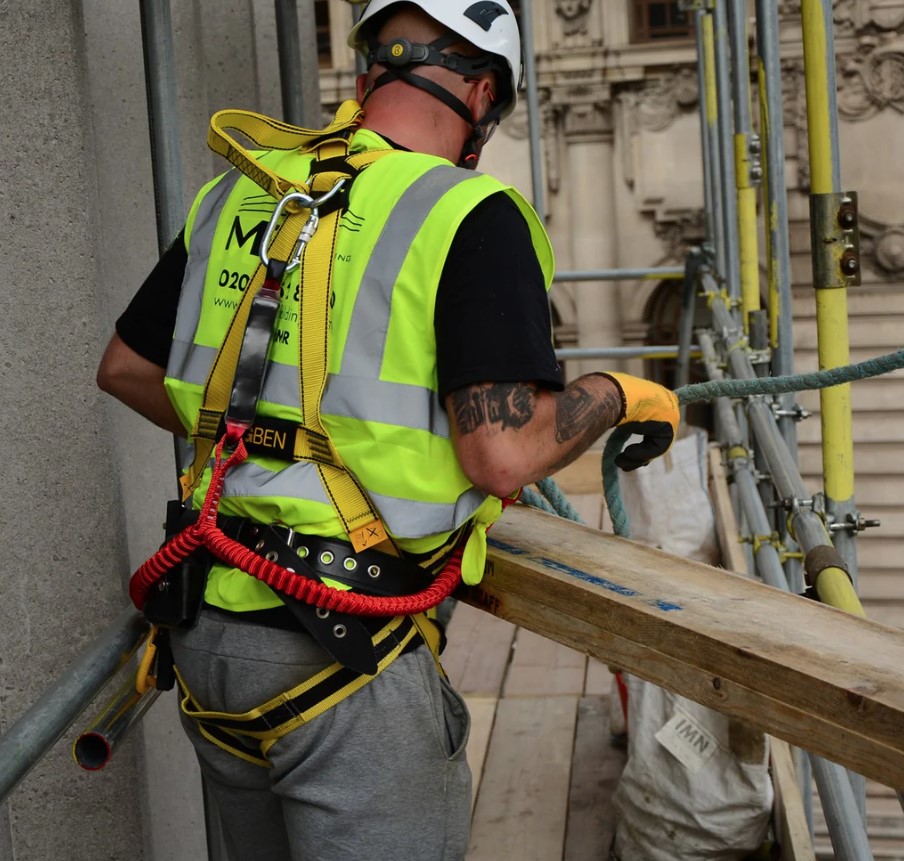
Signs that a safety harness should be removed from use
During the inspect of a safety harness before use, if any of the following abnormal signs are found, the user should generally consider removing the harness from use to minimize risks:
- Cuts, frayed webbing, or broken fibers, even if the damage is minor.
- Burn marks, stiff or hardened webbing caused by heat, or webbing that has become deteriorated, brittle, or discolored due to contact with acids or chemicals.
- Buckles, D-rings, or hooks that are bent, cracked, deformed, or severely rusted.
- Broken, loose, or detached stitching at load-bearing connection points.
- The harness has exceeded the service life recommended by the manufacturer.
- The harness has previously been subjected to the force of a fall, or the impact indicator has been activated.

Common mistakes to avoid when wearing a safety harness
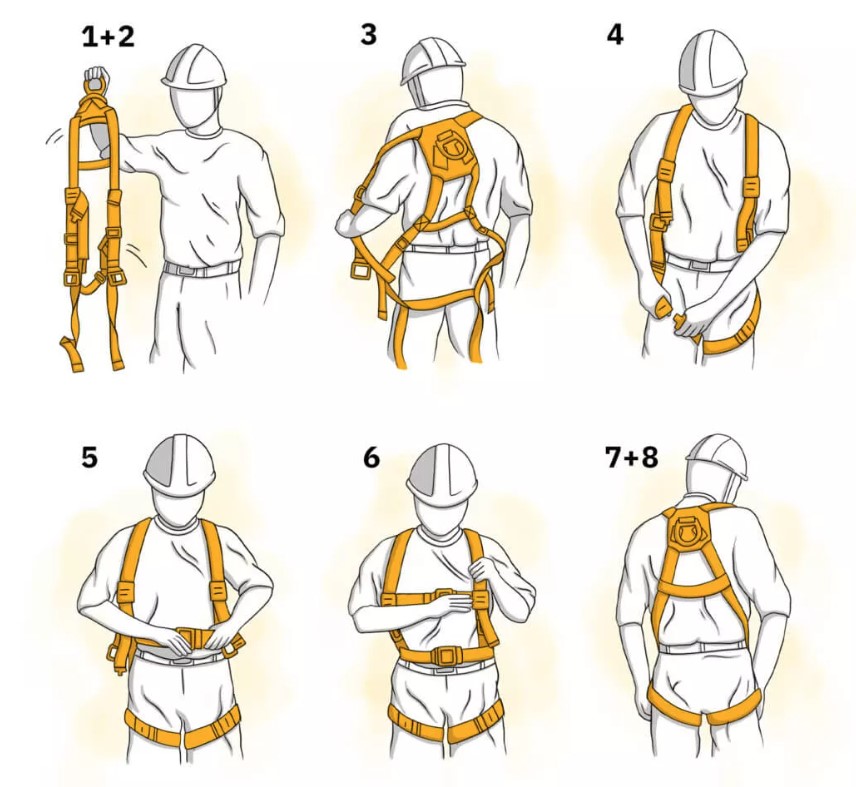
Thoroughly inspect a safety harness before use is one thing, but wearing it correctly is a factor that can determine a worker’s safety and even their life. During use, workers often make the following two common mistakes:
Wearing the harness too loosely
- Signs: Loosening the thigh and chest straps too much to avoid feeling restricted or experiencing friction.
- Consequences: In the event of a free fall, the sudden impact force can cause the body to slide forcefully inside the harness. Loose thigh straps may ride up toward the groin, causing serious injuries, while the chest strap buckle may strike the face and chin directly.
Positioning the D-ring incorrectly
- Signs: Allowing the rear D-ring to slip down to the waist or move significantly to one side instead of being positioned correctly between the shoulder blades according to technical requirements.
- Consequences: In the event of a fall, the body’s center of gravity may become misaligned, causing the pulling force to be distributed unevenly. This can cause the harness to tighten and potentially result in injuries to the spine or internal organs.
Buy genuine safety harnesses at Thien Bang
Thien Bang is proud to be a reputable and experienced supplier of genuine safety harnesses. We offer a range of safety harnesses at competitive prices, with reliable quality and safety testing commitments from leading brands.
At Thien Bang, our dedicated team is ready to provide enthusiastic advice and help customers find the most suitable product for their specific work requirements. Flexible support policies and attentive customer service give buyers greater peace of mind. For large-volume orders, customers can receive attractive discounts and special offers.
Through this article, Thien Bang hopes you now have a better understanding of the importance of inspect a safety harness before use, helping reduce risks and protect workers when working at height.
Contact information:
Hanoi office: 0981.056.066 – 0961.203.270
Ho Chi Minh City office: 0966.831.477 – 0986.720.134