
In work environments involving chemical exposure, the eyes may be at risk of injury when chemicals splash, splatter, or become airborne. Chemical safety goggles provide a protective barrier for the eyes, helping minimize direct contact with hazardous substances. Join Thien Bang to learn more about this type of protective eyewear and the key features to consider when choosing the right product.
Design features of chemical safety goggles
- Close-fitting and sealed design: Unlike fashion eyewear or standard dust-protection glasses, chemical safety goggles typically feature a fully enclosed frame that fits closely around the contours of the face, helping prevent chemical splashes from reaching the eyes from different angles.
- Sealing gasket: The part that contacts the face is usually made from soft materials such as flexible PVC, synthetic rubber, or silicone. It creates a secure seal around the eyes, helping prevent chemicals from entering through gaps while providing comfort during extended wear.
- Indirect ventilation or non-vented design:
- Indirect ventilation: Uses specially designed vents, typically directed downward, to allow limited airflow and reduce fogging while helping prevent chemical droplets from entering.
- Non-vented: Designed for environments involving a high risk of concentrated chemical vapors or toxic gases.
- Adjustable elastic strap: Equipped with an elastic strap that can be easily adjusted in length, helping keep the goggles securely in place even when the wearer moves vigorously.
Protective features of chemical safety goggles
- High-quality materials: Made from polycarbonate or acetate, offering high mechanical strength, good impact resistance, and a lightweight design.
- Scratch resistance: A protective surface coating helps minimize scratches caused by friction or contact, keeping the lenses clear and durable.
- Anti-fog protection: Anti-fog technology helps prevent condensation and maintain clear visibility in hot, humid environments or when wearing a face mask.
- UV protection: Effectively filters ultraviolet (UV) radiation, helping protect the eyes from potential risks associated with prolonged UV exposure, such as cataracts and macular degeneration.
- Chemical resistance: The lens material is resistant to acids, alkalis, and solvents, helping prevent cracking, deterioration, or deformation when exposed to chemicals.
Industries that require chemical safety goggles
- Chemical and oil and gas industries: Workers may handle acids, alkalis, solvents, and chemical intermediates during production, formulation, and transportation.
- Laboratories and research: Exposure to reagents, acids, industrial alcohols, formaldehyde, and various specialized chemicals is common.
- Agriculture and forestry: Involves mixing and spraying pesticides, herbicides, and liquid fertilizers.
- Electroplating and metal surface treatment: Workers handle rust-removal acids and electroplating solutions containing chromium, nickel, zinc, or copper, creating a risk of chemical splashes reaching the eyes.
- Battery and accumulator manufacturing and maintenance: Workers may be exposed to sulfuric acid and highly corrosive electrolyte solutions.
- Water treatment and environmental services: Involves the use of chlorine, ozone, sodium hypochlorite, and other disinfecting chemicals during treatment processes.
- Industrial painting and printing: Workers may come into contact with solvents, thinners, polyurethane paints, and other compounds that can irritate the eyes.
- Industrial cleaning and degreasing: Involves the use of acids, alkalis, and cleaning solutions to remove grease and residues from machinery and equipment.
Popular chemical safety goggles
-
3M 334 chemical safety goggles

-
Honeywell V-Maxx 10061963 safety goggles

-
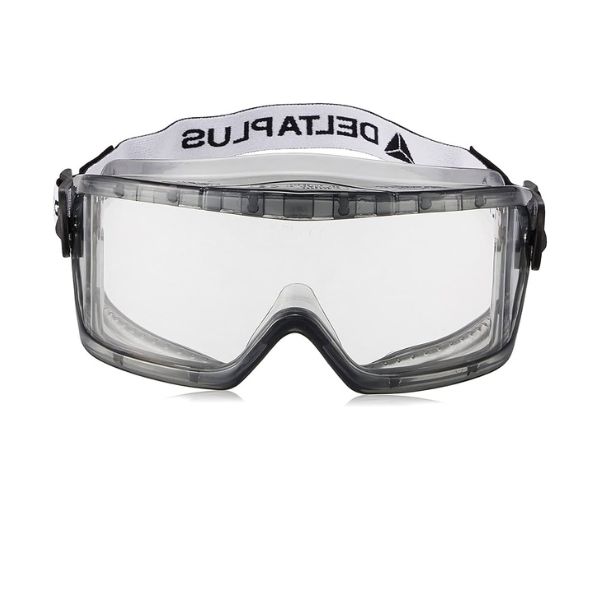
Delta Plus Galeras Clear safety goggles
-
DEWALT DPG82-11 Concealer safety goggles

Technical standards to check when buying safety goggles
Buying chemical safety goggles without appropriate safety certification may pose risks to their protective performance. The following are key standards to check:
- EN 166:2002 (European standard): A widely recognized standard in the Vietnamese market. When choosing chemical safety goggles, check for the “3” marking on the lens or frame, which indicates protection against liquids and liquid splashes.
- ANSI Z87.1 (US standard): A standard commonly found on products from 3M, Honeywell, and Uvex. The “D3” marking indicates protection against droplets and liquid splashes.
- TCVN 5039:1990 and TCVN 5082:1990: Vietnamese standards related to occupational eye protection, specifying requirements for eye protection equipment used in workplaces.
- ISO 16321 (replacing ISO 4849/4850): A newer international standard for eye and face protection equipment, gradually replacing previous ISO standards.
Where to buy genuine and reliable chemical safety goggles?
If you are looking for certified eye protection for chemical work environments, Thien Bang occupational safety equipment is a reliable option, offering practical product and service commitments:
- Genuine products and a wide selection: Thien Bang supplies safety goggles from brands such as 3M and Honeywell, with options for chemical, dust, and UV protection. Products are available with standards such as EN 166 and ANSI Z87.1, along with product-specific documentation of origin.
- Nationwide delivery: Fast delivery across Vietnam, with flexible support for both individual orders and large-volume purchases for factories and industrial facilities.
- 1-for-1 warranty support: A transparent warranty policy provides added peace of mind throughout the product’s use.
Choose Thien Bang for reliable eye protection. Contact us for product consultation and a quotation.
- Hanoi office: 0981.056.066 – 0961.203.270
- Ho Chi Minh City office: 0966.831.477 – 0986.720.134