
Safety harnesses are essential equipment for protecting workers when working at height. However, there are still many products on the market that do not meet safety standards, posing serious risks during use. Therefore, understanding safety harness standards is essential for assessing the technical requirements and safety level of the equipment. In this article, Thien Bang will explore the common standards applicable to safety harnesses.
Important safety harness standards
European standards (EN)
EN (European Norm) is a stringent and widely recognized system of standards for personal protective equipment (PPE), particularly safety harnesses:
- EN 361: Specifies requirements for full-body harnesses. The equipment must withstand high forces and distribute the load effectively in the event of a fall. It is an important standard for fall protection when working at height.
- EN 358: Applies to work positioning systems that help workers maintain a stable working position. This standard is intended for work positioning and does not provide protection against free falls on its own.
- EN 813: Applies to sit harnesses, commonly used in industrial climbing and work situations where workers need to remain suspended at height for extended periods.
Overall, EN standards are widely recognized for their safety requirements and are applied throughout Europe and many other countries, including Vietnam.
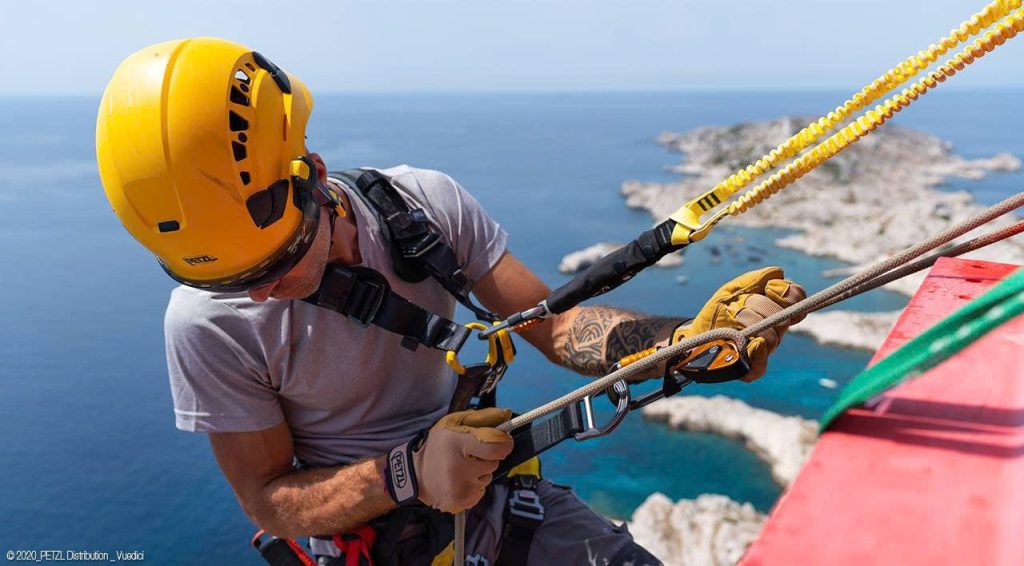
American standards (ANSI/OSHA)
Within the system of safety harness standards, ANSI and OSHA are two sets of standards and regulations commonly referenced in the United States and in many projects with strict occupational safety requirements. Specifically:
- ANSI Z359: A comprehensive set of standards for fall protection systems, including harnesses, shock-absorbing lanyards, and anchor points. Equipment is required to meet stringent requirements for strength, load capacity, and periodic inspection.
- OSHA regulations: Issued by the U.S. Occupational Safety and Health Administration, OSHA establishes mandatory requirements for the use of safety harnesses, along with training and procedure inspection requirements to help reduce workplace accidents.
Vietnamese standards (TCVN)
In Vietnam, technical standards for safety harnesses are developed to help protect workers when working at height. Two commonly referenced standards include:
- TCVN 2298:1978: Specifies requirements for durable and strong harness materials, helping ensure that the equipment remains intact under normal working conditions. The design must provide adequate mechanical strength through tests such as tensile strength and abrasion resistance, and is widely applied in construction, installation, and maintenance work.
- TCVN 7802-1:2007: Provides detailed requirements for full-body harnesses used in fall protection systems. The harness structure includes components such as waist belts, shoulder straps, leg straps, and attachment points, with sufficient strength to withstand loads in emergency situations. Components such as buckles and connectors must lock securely, while the equipment is also tested for resistance to chemicals and UV exposure.
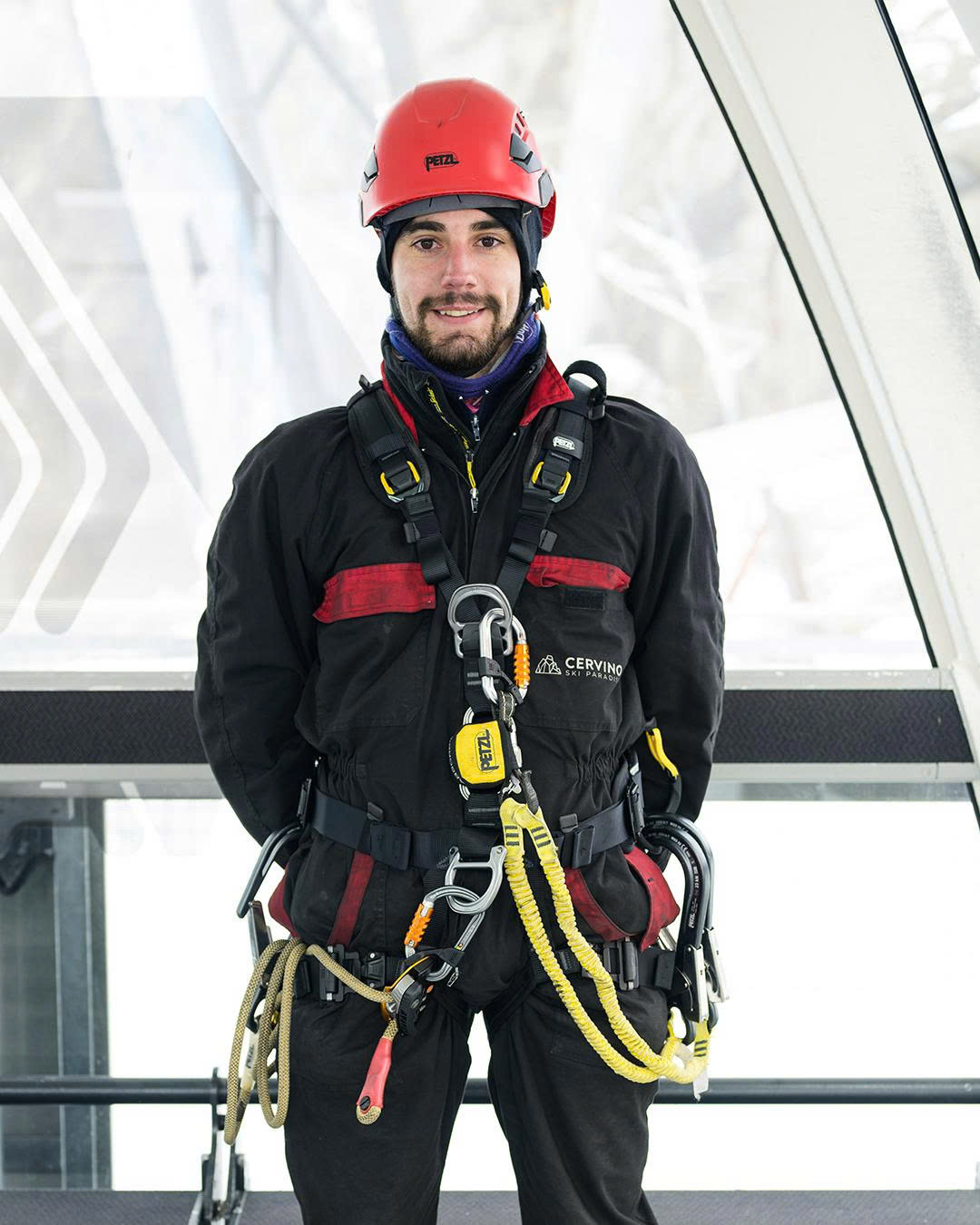
Where to buy certified safety harnesses from a reputable supplier
Understanding safety harness standards is the first step in choosing suitable equipment, but the source of purchase is also an important factor that should not be overlooked. A product displaying a standard on its label does not necessarily guarantee quality if the manufacturer, origin, and accompanying documentation are unclear.
Criteria for choosing a safety harness supplier
- Products meeting international standards: Prioritize harnesses that comply with EN, ANSI, or TCVN standards.
- Clear product origin: The supplier should provide manufacturer information and relevant inspection or certification documents.
- Professional consultation: The supplier should be able to recommend suitable solutions for different types of work.
- Diverse product range: A comprehensive fall protection system, including harnesses, lanyards, anchors, and related equipment.
- Experience and reputation: Proven experience supplying equipment for industries such as construction, power, manufacturing, and other industrial sectors.
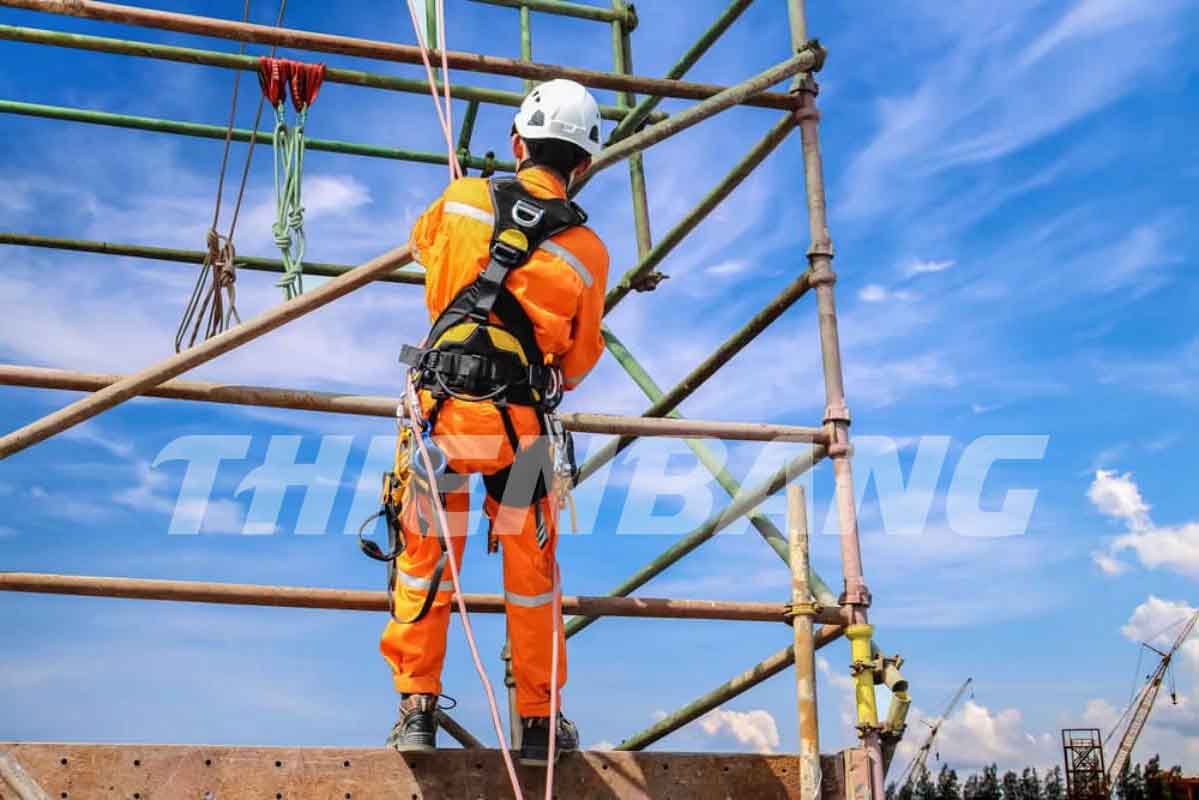
Bulk safety harness supplier
Thien Bang is one of the suppliers of personal protective equipment in Vietnam, offering products designed for working at height and fall protection systems.
- Wide range of products: Full-body harnesses, fall arrest lanyards, shock-absorbing lanyards, and other equipment for working at height.
- Clear standards information: Depending on the product, equipment may comply with standards such as EN, ANSI, CE, or TCVN. Businesses should check the specific standards of each product before purchasing.
- Product documentation: Relevant documents such as CO, CQ, and technical documentation can be provided for individual products upon request.
- Bulk supply: Consultation, quotations, and nationwide delivery are available, making Thien Bang suitable for construction sites, factories, and businesses requiring equipment in large quantities.
Conclusion
Safety harness standards are a key factor in determining the effectiveness of protection when working at height. Understanding these standards not only helps you choose the right products but also supports compliance with safety requirements and minimizes the risk of workplace accidents.
Instead of making a decision based solely on appearance or price, businesses and workers should prioritize equipment with clear certifications and documentation from reputable suppliers. For detailed advice and genuine, quality-compliant safety harnesses, contact Thien Bang for dedicated support and a suitable quotation.
Hanoi office: 0981.056.066 – 0961.203.270
Ho Chi Minh City office: 0966.831.477 – 0986.720.134
See at more: Comparison Of Full-Body And Half-Body Safety Harness