
Chemical protective clothing is essential protective equipment that helps prevent toxic exposure, chemical burns, and occupational diseases among workers. Due to the specific hazards of chemical exposure, including gases, liquids, dust, and sprays, this type of protective clothing requires specialized design features and must comply with stringent safety testing standards. Join Thiên Bằng as we explore the key design features of chemical protective clothing in the article below.
5 reasons why chemical protective clothing is essential
- Direct protection of life and health: Prevents acid and alkali burns, skin corrosion, and dangerous poisoning caused by chemicals penetrating the skin.
- Compliance with legal requirements: Required under occupational safety and health regulations. Businesses that fail to provide appropriate protective equipment may face substantial fines or suspension of operations.
- Prevention of long-term occupational diseases: Helps prevent the gradual accumulation of chemicals in the body that may cause cancer, liver or kidney damage, and chronic dermatitis.
- Safety during emergency response: Essential for workers who need to respond promptly to chemical leaks and spills.
- Reduced business costs and risks: Helps prevent workplace accidents, maintain workers’ confidence, and protect the company’s reputation.
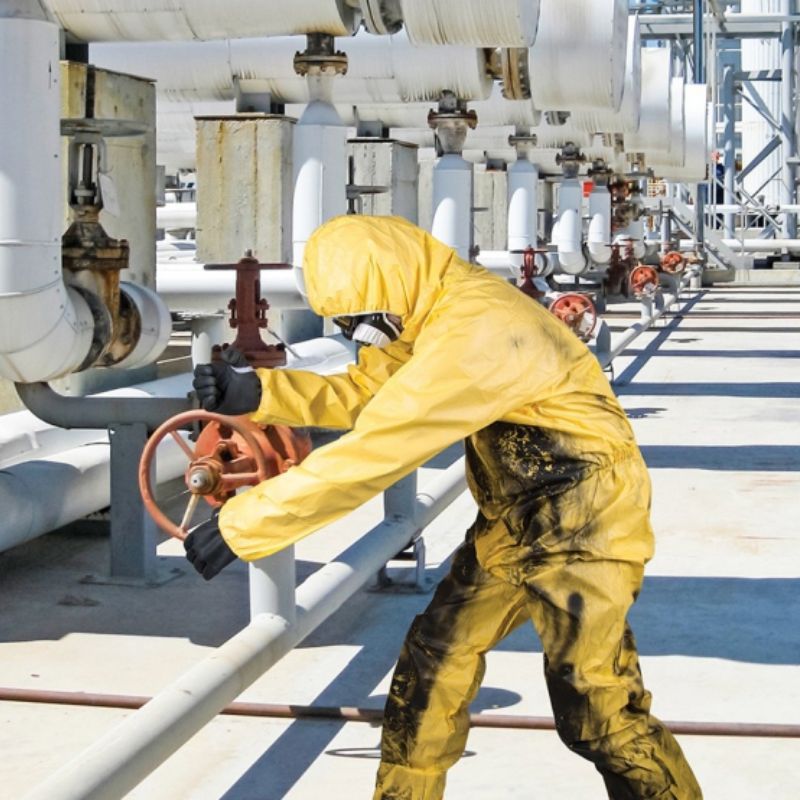
Design features of chemical protective clothing
Materials
- Made from multilayer polyolefin membranes (polypropylene coated with polyethylene) or corrosion-resistant, plastic-coated fabrics such as PVC, neoprene, and Tyvek. The smooth surface helps liquids slide off more easily.
- Must meet relevant technical standards for tear resistance, puncture resistance, chemical repellency, and antistatic performance to help prevent fires and explosions in environments containing volatile solvents.
Design
- One-piece coveralls or separate jackets and trousers with extended overlap at the waist are preferred to eliminate gaps around the waist and prevent chemical splashes or penetration.
- Seams are sealed with waterproof seam tape or ultrasonic welding to close needle holes and prevent chemical leakage.
- Wrists and ankles feature elastic cuffs or hook-and-loop fasteners, allowing them to fit securely over or inside protective gloves and boots, as appropriate, and helping prevent liquids from flowing inside the clothing.
Zipper system and additional details
- The front zipper is covered by one or two fixed protective flaps secured with adhesive fasteners to protect the zipper and prevent chemical penetration.
- The entire garment is designed with a minimalist approach, reducing the number of pockets or using only pockets with securely sealed flaps. Unnecessary details such as pleats, ribbons, and belt loops are eliminated to prevent chemicals from accumulating on the clothing during work.
Technical standards for chemical protective clothing
Classification by protection level (EN / ISO standards)
The European Type 1 to Type 6 classification system is an important basis for selecting protective clothing according to the chemical exposure environment.
- Gas-tight protection (Type 1 & Type 2 – EN 943): Designed for particularly hazardous environments. These garments must provide gas-tight protection to prevent toxic gases and vapors from penetrating the suit.
- Protection against pressurized liquid jets (Type 3 – EN 14605): Suitable for tasks involving the risk of direct splashes or powerful jets of liquid chemicals hitting the body.
- Protection against liquid sprays (Type 4 – EN 14605): Designed for environments where workers may be exposed to sprayed chemicals, mists, or airborne liquid droplets.
- Protection against hazardous dust (Type 5 – EN ISO 13982-1): Intended for workplaces involving the production or handling of powdered chemicals, fine dust, and hazardous fibers.
- Basic protection (Type 6 – EN 13034): Suitable for low-risk environments where workers handle small quantities of chemicals or face occasional, light splashes of liquid.
Vietnamese national standards (TCVN)
Businesses operating in Vietnam should prioritize relevant national technical standards when assessing the quality of protective clothing.
- TCVN 7617-1:2007 (ISO 13982-1:2004): Specifies performance requirements for protective clothing against airborne solid particles.
- TCVN 6692:2000 (ISO 6530:2005): Evaluates the resistance of clothing materials to liquid chemical penetration and the repellency of liquids from fabric surfaces.
- TCVN 6691:2000 (ISO 6529:2001): Specifies test methods for measuring the permeation of hazardous liquids and gases through clothing materials.
- TCVN 7421-1:2004: Specifies general mechanical safety requirements, including tensile strength, tear resistance, and the safety of materials in contact with the wearer’s skin.
Popular types of chemical protective clothing
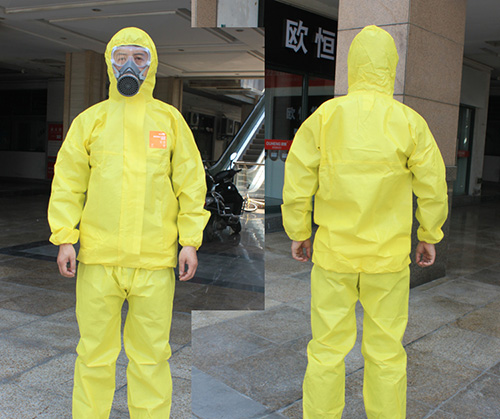
Microgard AlphaTec 2000 chemical protective coveralls
- Made from two layers: a polyethylene (PE) film and nonwoven fabric, helping block particles larger than 0.1 micrometers.
- Elasticated wrist cuffs with additional thumb loops.
- Features a two-way zipper with a protective flap to help ensure a secure closure.
- Constructed with bound seams for enhanced protection.

Microgard AlphaTec 3000 chemical protective coveralls
- Made from three layers: two layers of nonwoven fabric and an outer film layer, suitable for chemical protection.
- Double-layer sleeves help provide a secure fit around the wrists when wearing gloves.
- Features a double-closure design with durable, heat-sealed seams for enhanced safety.
- Protection standards: Type 3-B, Type 4-B, Type 5-B, EN 14126, EN 1073-2, and EN 1149-5.
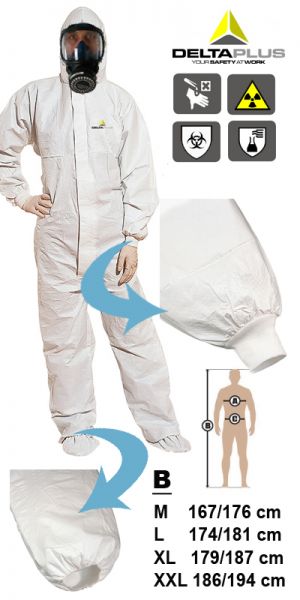
Delta Plus DT117 chemical protective coveralls
- Made from DELTATEK® 5000 nonwoven fabric, consisting of 70% polypropylene and 30% polyethylene.
- Provides protection against dry chemical dust, radioactive particles, liquid chemicals, static electricity, microorganisms, and biological contamination.
Where to buy chemical protective clothing
If your business is looking for safe and reliable chemical protective clothing, Thiên Bằng is one of the leading suppliers worth considering.
- Products meeting technical standards: Specializes in distributing and manufacturing chemical protective clothing, including imported products that meet EN and ISO standards, as well as locally manufactured products complying with TCVN standards. These garments are designed to provide protection against liquid penetration, corrosion, and hazardous substances.
- Flexible tailoring and design: Offers a wide range of styles, from one-piece coveralls to separate jackets and trousers. Custom tailoring, company logo printing or embroidery, and the addition of reflective strips are also available.
- Cost optimization: Direct manufacturing without intermediaries helps ensure competitive prices, along with preferential pricing policies for bulk orders.
Contact information for Thiên Bằng:
- Hanoi: No. 19, Alley 20/10, Phu Minh Street, Minh Khai Ward, Bac Tu Liem District.
- Ho Chi Minh City: No. 36, Street 18, Quarter 1, Binh Hung Hoa Ward, Binh Tan District.
- Hotline/Zalo: 0906.602.116 – 0966.831.477