
At construction sites, reflective vests are frequently exposed to dust, mud, sweat, and various stains after each work shift. If not washed properly, the fabric and reflective strips can deteriorate quickly. Thien Bang shares simple ways to wash construction reflective vests, helping keep them clean and maintain their durability throughout use.
How to wash a construction reflective vest by hand
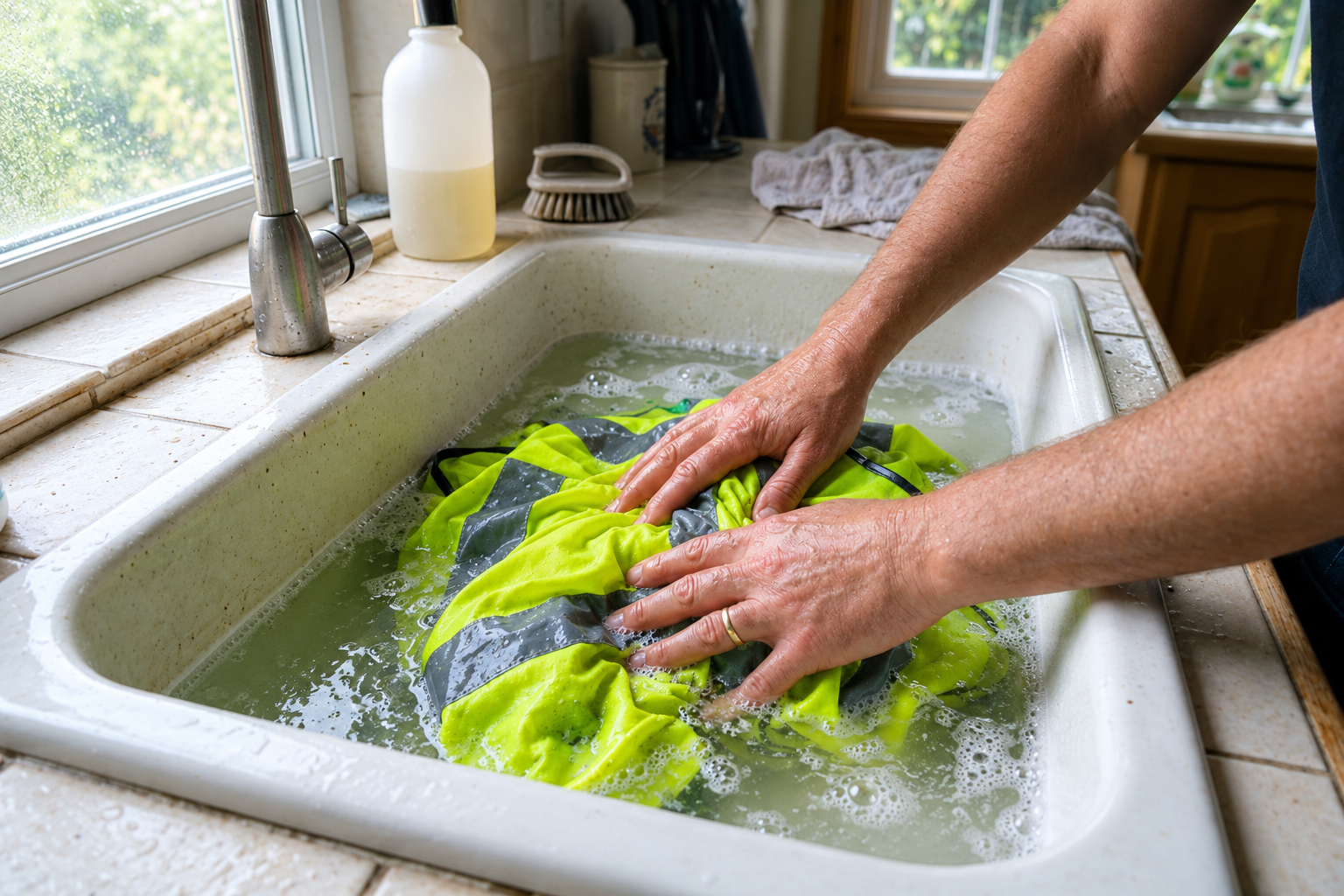
Hand washing is still the preferred option if you want to minimize friction and twisting force on the reflective strips. It also makes it easier to treat areas with heavy dust, mud, and dirt after each work shift.
Step 1: Remove loose dust, sand, and dried mud
Before soaking, gently brush off construction dust, sand, dried mud, and other debris from the surface of the vest. For localized stains, apply a small amount of mild laundry detergent and leave it for a few minutes. Avoid vigorous scrubbing while the mud is still wet, as this may scratch or damage the reflective strips.
Step 2: Soak and wash for 10–20 minutes
Prepare cold water or warm water at around 30–40°C and add an appropriate amount of mild laundry detergent. Turn the vest inside out and soak it for 10–20 minutes, then gently squeeze each stained area. Do not twist the vest or scrub directly on the reflective strips. For heavily soiled areas such as the collar, cuffs, or other high-contact areas, use a soft cloth or soft-bristled brush to clean them.
Step 3: Rinse thoroughly to remove detergent residue
After washing, rinse the vest several times with clean water until all detergent and foam have been removed. Thoroughly removing detergent residue helps prevent the fabric from becoming dull and reduces the risk of affecting the material.
Step 4: Gently press out excess water and dry properly
Once the vest is clean, gently press it to remove excess water. Do not wring or twist it, as this can deform the vest and affect the edges of the reflective strips. Hang the vest in a dry, well-ventilated area and keep it away from strong direct sunlight to help prevent the main fabric from fading.
How to wash a construction reflective vest in a washing machine
Many people prefer machine washing because it saves time. However, choosing the wrong cycle can expose the reflective strips to excessive agitation, spinning, and heat. The vest can still be machine washed, but the machine should be set correctly from the preparation stage.
Step 1: Prepare the vest before putting it in the machine
First, turn the vest inside out and fasten all Velcro, zippers, and snap buttons. If you have a laundry bag, place the vest inside to reduce friction with the drum and other clothes. Avoid washing it with jeans, heavy garments, clothing with hard components, or footwear, as these can increase friction and put additional stress on the reflective strips.
Step 2: Select a gentle wash cycle
Choose a gentle cycle such as Gentle or Delicate, along with a low spin speed. Keep the water temperature at no more than 30–40°C, or lower if the care label specifies otherwise. Use a mild laundry detergent and avoid chlorine, harsh bleach, or fabric softener unless recommended by the manufacturer.
Step 3: Remove the vest immediately after washing
Once the cycle is complete, remove the vest promptly instead of leaving it in the damp drum for an extended period. Hang it in a well-ventilated area away from strong direct sunlight to help prevent fading and protect the reflective strips. If tumble drying is necessary, use a low-heat or cool-air setting. Avoid high heat for prolonged periods, as it may cause the reflective layer to crack, curl at the edges, or peel away from the fabric.

Washing guidelines for construction reflective vests
Always check the care label before washing
Before washing a reflective vest, carefully read the care instructions on the garment. Each model may differ in terms of fabric, reflective strips, and the method used to apply or attach the reflective material. Pay attention to the recommended water temperature, drying method, ironing, dry cleaning, and maximum number of washes specified by the manufacturer.
Control the water temperature: 30–40°C
Wash with cold water or warm water at around 30–40°C, unless the care label specifies a lower temperature. Excessively hot water can accelerate fabric deterioration and may cause the reflective strips to curl, crack, or peel after repeated washing.
What to avoid when washing
- Harsh chemicals: Do not use bleach or strong solvents, as they may damage the reflective strips.
- Fabric softener: It can leave a residue on the reflective strips, reducing their reflectivity and making them more prone to peeling.
- Aggressive scrubbing: Do not use a stiff brush directly on the reflective strips, as this can scratch or damage their surface.
Reduce friction during washing
Turn the vest inside out and fasten the zippers, snap buttons, and Velcro before washing. Avoid washing it with jeans, garments with metal zippers, or rough fabrics to prevent excessive friction that could cause the reflective strips to peel at the edges.

Quick answers about washing construction reflective vests
- Can construction reflective vests be machine washed?
Yes, if the care label allows machine washing. Choose a gentle cycle, use a low spin speed, keep the water temperature at no more than 30–40°C, and preferably use a laundry bag to reduce friction. - Can you use bleach, hot water, a dryer, or an iron on construction reflective vests?
Do not use bleach or hot water unless permitted by the care label. If tumble drying is necessary, use a low-heat or cool-air setting. When ironing, turn the vest inside out, use a low temperature, and avoid ironing directly over the reflective strips. - How should construction reflective vests be dried so they dry quickly while remaining durable?
Turn the vest inside out and hang it in a well-ventilated, shaded area. Avoid exposing it to strong direct sunlight, as this can cause the fabric to fade and may affect the reflective strips. - Can construction reflective vests be washed with fabric softener or dry-cleaned?
Fabric softener and dry cleaning should be avoided unless specifically permitted by the care label. These products and chemicals may affect the reflective strips.

Conclusion
Knowing how to properly wash construction reflective vests not only helps keep them clean after each use but also reduces damage and helps maintain the durability of the reflective strips. We hope these tips from Thiên Bằng help you care for your vest properly and get more effective use from it.