
To clean safety shoes properly, it is important to understand the material of the footwear and choose a suitable cleaning method. Each material has different characteristics in terms of water resistance, dirt removal, and durability when exposed to chemicals or harsh working environments. In this article, Thiên Bằng explains how to approach cleaning safety shoes according to different materials to remove dirt effectively and maintain the shoes’ quality over time.
Guide on cleaning safety shoes based on different materials
Cleaning safety shoes made of leather (smooth leather, suede, and nubuck)
Material characteristics
- Smooth leather: Features a flat surface that is easy to wipe clean, but it can dry out and crack if not conditioned properly.
- Suede: Soft and porous, making it easy to absorb dust and water; requires gentle cleaning.
- Nubuck: Similar to suede but with a lightly buffed surface, making it equally prone to dirt and requiring a specialized brush.
Cleaning instructions
- Smooth leather: Wipe off surface dirt using a damp cloth. For stubborn stains, dampen a cloth with a specialized leather cleaner and gently rub in circular motions.
- Suede / nubuck: Use a specialized brush to sweep in one direction. For light stains, use a suede cleaning eraser or a dry cleaning spray designed for suede.
Recommended products and cleaning solutions
- Leather cleaner and leather balm: Designed for smooth leather.
- Suede cleaner spray: Suitable for suede and nubuck leather.
- Suede eraser: Specialized for cleaning suede.
- Avoid harsh chemicals: Do not use strong detergents, alcohol, acetone, or bleach, as these can cause color fading and cracking on genuine leather safety shoes.
Drying and conditioning
- Moisture absorption: Insert newspapers inside the shoes after cleaning to absorb moisture and maintain their shape.
- Air drying: Dry the shoes in a well-ventilated area, avoiding direct sunlight.
- Conditioning: Apply a leather conditioner or specialized oil to keep the leather soft and prevent drying or cracking. For nubuck leather, apply a protective waterproof and dirt-repellent spray after cleaning.
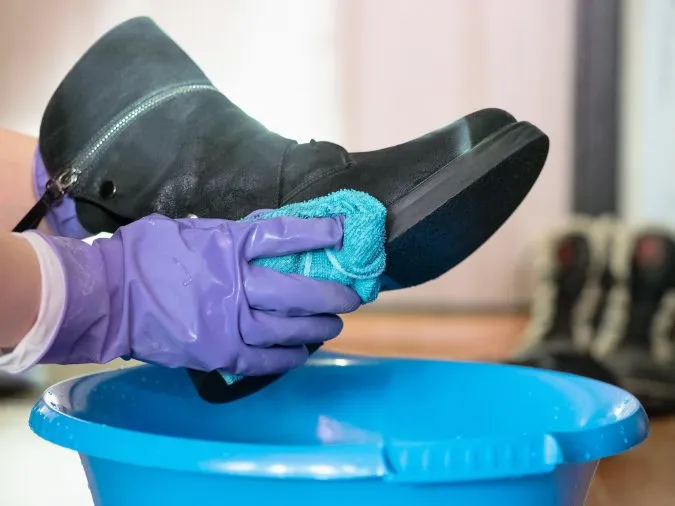
Cleaning safety shoes made of fabric
Material characteristics
- Breathable, lightweight, and flexible, but easily absorbs water and retains odors if not dried thoroughly.
- Prone to mold if left damp or washed improperly.
Cleaning instructions
- Remove the insoles and shoelaces before cleaning.
- Use a soft brush and mild soapy water to gently scrub away dirt.
- For stubborn stains, soak the shoes briefly in warm water for 5 minutes, then scrub gently and rinse clean.
Tips
- For oil stains, sprinkle baking soda over the area to absorb the oil before washing.
- Avoid scrubbing too hard or using a stiff brush, as this can cause the fabric to fray.
Drying
- Use a dry towel to blot excess water, then insert newspapers inside the shoes to absorb moisture.
- Allow fabric shoes to dry naturally in a well-ventilated area. Avoid hair dryers or direct intense sunlight, as heat can shrink the fabric and weaken the glue.

Cleaning safety shoes made of synthetic leather (PU, rubber, and PVC)
Material characteristics
- Water-resistant, highly chemical-resistant, durable, and easy to clean.
- Commonly used in environments with high levels of grease, chemicals, or humidity.
Cleaning instructions
- Use a brush or a cloth dipped in soapy water to clean the entire shoe.
- For dried cement or dirt stains, gently scrape them off after they are completely dry.
- Recommended solutions: Neutral soap, warm water, and baking soda for odor elimination.
Cleaning precautions
- Avoid strong detergents with high acidity or alkalinity, as they can erode the surface or degrade the protective coating of synthetic materials.
- After cleaning, rinse thoroughly with clean water and wipe dry using a soft towel.
Drying
- Place synthetic leather shoes in a dry, well-ventilated area, away from direct intense sunlight or high heat (do not use hot hair dryers).
- Paper towels or absorbent cloth can be inserted inside the shoes to absorb moisture faster.

Proper drying and storage after cleaning safety shoes
Properly drying and storing your shoes is the final yet crucial step in the process of cleaning safety shoes correctly. If done improperly, all previous cleaning efforts could be in vain, potentially leading to quick deterioration, reduced protective efficiency, and negative impacts on the user’s health.
Proper drying methods
After completing the process of cleaning safety shoes, they must be dried properly to preserve their structure and material quality.
- Shoes should be allowed to dry naturally in a cool, well-ventilated area with a gentle breeze. Absolutely avoid drying shoes under direct sunlight or placing them near high-heat sources such as hair dryers, heaters, open flames, or sunlit windows.
- Old newspapers, thick paper towels, or specialized moisture-absorbing materials should be stuffed inside the shoes to absorb internal moisture while maintaining their original shape.
Storage after cleaning
Once the shoes are completely dry, store them properly to maintain their lifespan and long-term protective performance.
- Store shoes in a dry, well-ventilated place. Avoid keeping shoes in sealed cabinets, plastic bags, or high-humidity areas such as bathrooms or basements, as these environments encourage mold, foul odors, and harmful bacteria growth.
- Do not stack shoes on top of one another or place heavy objects over them. Especially for safety shoes with steel or composite toecaps, improper storage can deform the shape or compromise the structural integrity.
- Periodically inspect the condition of the shoes weekly or after each work shift, focusing on critical points such as the soles, toecaps, collars, and seams. Detecting early signs of wear and tear allows for timely action, avoiding potential safety hazards during use.
Conclusion
Understanding how to clean safety shoes based on their material will help you clean your footwear properly, minimizing peeling and cracking while maintaining their protective capabilities on the job. Remember to combine regular cleaning with proper storage to extend the product’s lifespan. If you are looking for safety shoes tailored to your specific work environment, contact Thiên Bằng for expert advice and assistance in selecting the right product for your needs.
📞 Hotline: 0981.056.066 – 0966.831.477
You may also be interested in: Top 16 safety shoes for workers in 2026