
PU-coated gloves and Nitrile-coated gloves are widely used in various work environments, from electronic component assembly to mechanical work and maintenance. However, the two types are not completely interchangeable, as each coating offers different advantages. Understanding the differences will help you choose the right gloves for each job. Let’s explore the details with Thien Bang in the article below.
PU-coated gloves
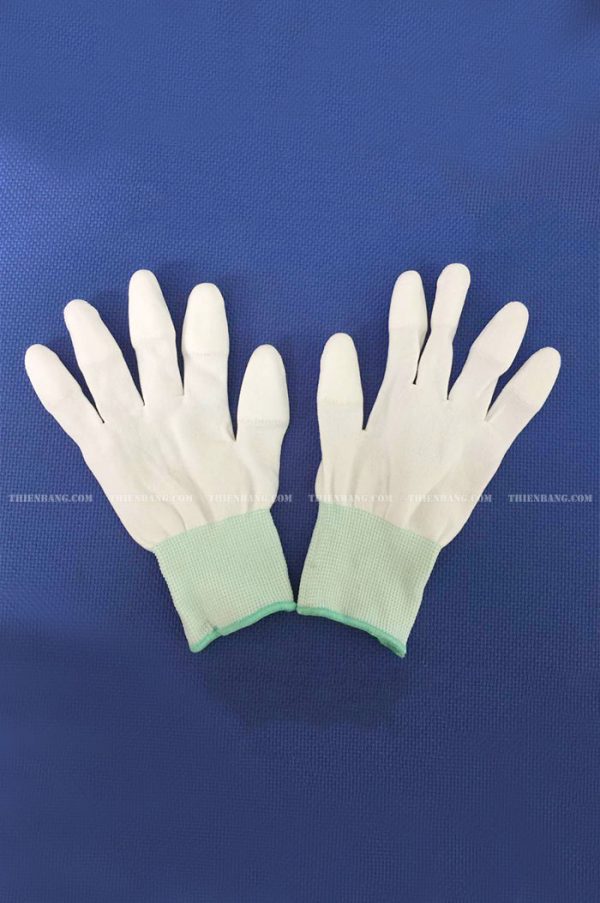
Polyurethane (PU) is a type of polymer produced through a reaction between diisocyanate and polyol. This material can be manufactured to an exceptionally thin thickness, typically around 0.03–0.05 mm on the palm area. This thinness is not a drawback but one of PU’s key characteristics.
PU-coated gloves typically feature a nylon or polyester liner, with polyurethane coating applied to the fingertips, palm, 3/4 of the hand, or almost the entire surface. The glove liner can also be made with specialized fibers such as cut-resistant HPPE, fiberglass, fine steel fibers, or carbon fibers, depending on the required level of protection.
Thanks to this construction, PU-coated gloves are thin, lightweight, close-fitting, and flexible, making them suitable for tasks that require precise handling. The polyurethane coating also has a low ionic content, which helps minimize particle deposition and reduce the risk of static buildup when working with sensitive electronic equipment.
Characteristics
- High abrasion resistance: Helps extend glove durability when frequently exposed to rough surfaces or continuous friction.
- Good thermal insulation: Helps reduce the impact of heat or cold from the surrounding environment and materials during work.
- Good grip: Provides a secure grip on components and tools while reducing the risk of slipping during handling.
- High tactile sensitivity: The thin PU coating preserves fingertip sensitivity, making it easier to handle small components and delicate parts.
Nitrile-coated gloves
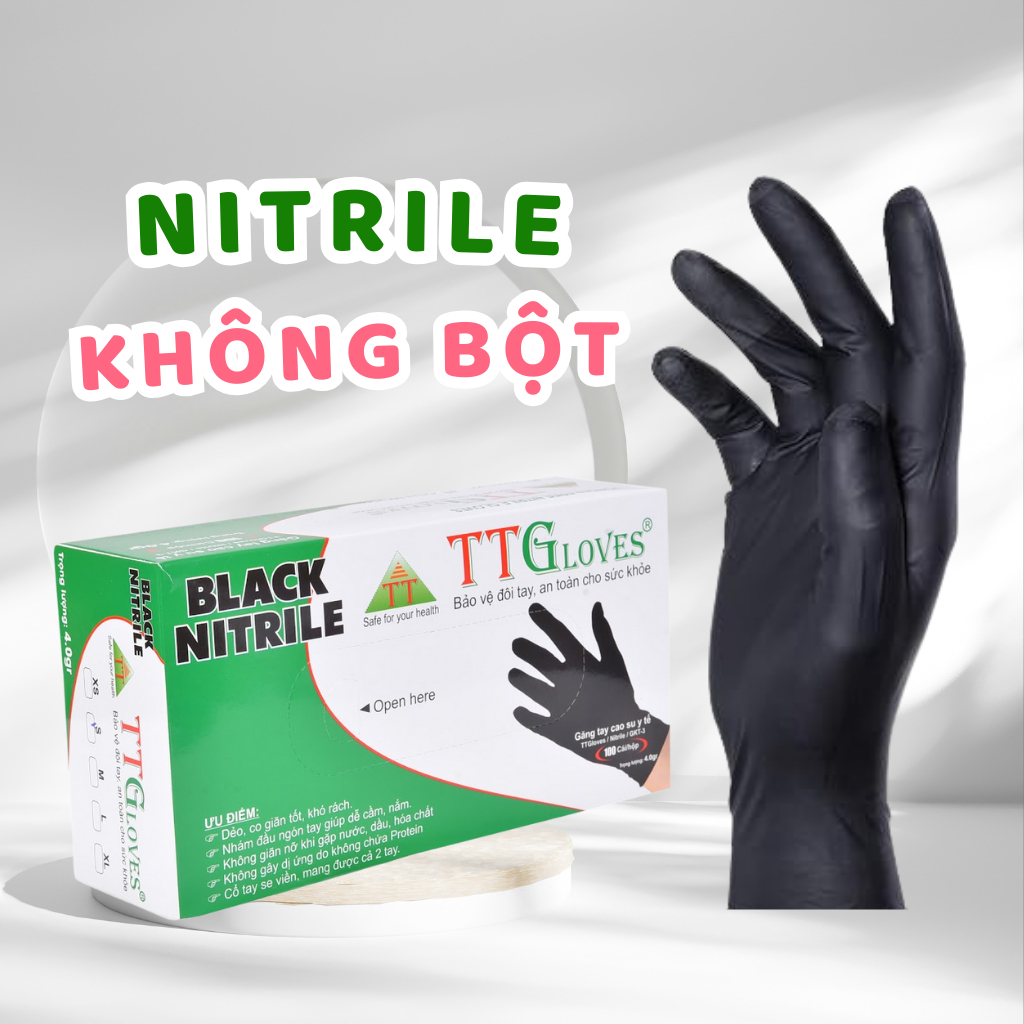
Nitrile rubber, chemically known as acrylonitrile butadiene rubber (NBR), is a synthetic copolymer specifically developed to resist oils, fuels, and various chemicals. Unlike latex, nitrile does not contain natural rubber proteins, making it a suitable alternative for people with latex allergies.
Nitrile gloves are manufactured through a dipping process, in which hand-shaped molds are repeatedly immersed in liquid nitrile compounds to build up the glove thickness. Standard nitrile examination gloves typically have a thickness of around 0.08–0.12 mm, while heavy-duty industrial nitrile gloves can reach 0.3 mm or more. As a result, thicker industrial nitrile gloves generally feel thicker, sturdier, and more durable during use.
Characteristics
- Water-resistant: Nitrile is a synthetic rubber that helps prevent water and other liquids from penetrating the gloves.
- Skin-friendly: Free from natural rubber proteins, nitrile reduces the risk of latex-related allergic reactions.
- Good chemical resistance: Provides a protective barrier against many chemicals, solvents, oils, greases, and cleaning agents. Nitrile can resist certain chemicals such as nitric acid, acetic acid, sulfuric acid, sodium hydroxide, phenol, and ethanol.
- High durability: Especially for thicker nitrile gloves, the material helps reduce the risk of tearing or puncturing during use.
- Low biodegradability: Nitrile has lower biodegradability than natural rubber because it is a synthetic rubber material.

Detailed comparison table of PU-coated gloves and Nitrile-coated gloves
| Criteria | Nitrile-coated gloves | PU-coated gloves |
| Main material | Polyester coated with synthetic nitrile rubber, typically blue or gray | Polyester or nylon with a thin, lightweight PU coating |
| Slip resistance | Excellent, including when handling oily surfaces and wet materials | Good on dry surfaces, providing high precision when handling objects |
| Durability & abrasion resistance | High, with good abrasion resistance, suitable for heavy-duty work | Good, suitable for work involving moderate levels of friction |
| Oil & chemical resistance | Good resistance to oils, grease, and many chemicals | Limited resistance to oils and grease; poor chemical resistance |
| Water resistance | Poor; the fabric liner can absorb water and become wet when exposed to water | High water resistance; the PU coating helps prevent water from penetrating the glove surface |
| Breathability | Low; thicker coatings may feel hot and cause sweating during prolonged use | Excellent; lightweight, close-fitting, and more breathable |
| Reference price | VND 20,000–50,000/pair | VND 15,000–30,000/pair |
When should you use PU-coated gloves?
PU-coated gloves are suitable for tasks that require dexterity, good grip, and precise handling, especially in dry environments. You should choose this type of glove when:
- Precise handling is required: The thin PU coating helps maintain good tactile sensitivity, making it suitable for small components and tasks that require precision.
- Gloves need to be worn for long periods: The gloves are thin, lightweight, and close-fitting, providing comfort and helping reduce hand fatigue during extended work.
- Working in dry environments: PU is suitable for tasks where there is little or no exposure to oil, grease, chemicals, or liquids.
- Static control is required: In the electronics and semiconductor industries, carbon PU-coated gloves can be used to help control static electricity.
Common applications of PU-coated gloves
- Electronic component assembly, electrical equipment repair, and maintenance.
- Cleanroom work, semiconductor manufacturing, and component inspection.
- Quality inspection, packaging, and other light-duty tasks.
Note: PU-coated gloves are not suitable for environments with high levels of oil, grease, chemicals, or tasks involving frequent contact with sharp objects. In these situations, Nitrile-coated gloves may be a better choice due to their better oil resistance and durability.

When should you use nitrile-coated gloves?
Nitrile-coated gloves are suitable for tasks that require oil and grease resistance, improved grip, and better hand protection. You should choose this type of glove when:
- Working with oil and grease: Suitable for mechanical work, repairs, equipment maintenance, or tasks involving frequent contact with oil and grease.
- Working in wet environments: The nitrile coating helps limit water penetration and improves grip when handling slippery objects.
- Working with chemicals: Can be used when handling certain oils, solvents, and mild chemicals. The actual level of protection depends on the specific chemical and glove design.
- High durability and abrasion resistance are required: Nitrile provides good resistance to friction, making it suitable for tasks involving frequent gripping and handling.
Common applications of nitrile-coated gloves
- Construction, warehousing, mechanical work, and woodworking.
- Painting, equipment maintenance, and industrial cleaning.
- Handling and transporting goods in environments with oil, grease, or slippery surfaces.
Note: Do not use nitrile gloves in environments with temperatures above 100°C or when handling highly corrosive chemicals such as concentrated acids or strong bases.
Where to buy genuine PU-coated gloves and nitrile-coated gloves
If you are looking for wholesale, genuine PU-coated gloves and Nitrile-coated gloves from Thien Bang, Thien Bang is a leading trusted supplier. The company is trusted by many businesses, factories, mining enterprises, and construction projects nationwide.
- Wholesale & retail distribution of EN388–EN374 compliant nitrile and PU gloves: A wide range of models available.
- Competitive wholesale prices – 15–30% discounts for large orders (10–1,000 pairs).
- Products in stock, fast delivery within 24–48 hours nationwide.
- Complete invoices and CO-CQ documents, with support for acceptance procedures and VAT payments for businesses and construction projects.
Choosing the right PU-coated gloves and Nitrile-coated gloves not only improves work efficiency but also helps ensure user safety in demanding environments such as factories, mechanical workshops, painting and repair work, and electronic assembly.
Don’t choose low-quality products just to save a small amount of money upfront, as this can affect workplace safety and productivity. Contact Thien Bang today for advice on the products best suited to your needs.
Hotline / Zalo:
- Northern Vietnam: 0981.056.066 – 0961.203.270
- Southern Vietnam: 0966.831.477 – 0986.720.134