
Safety goggles are manufactured and used according to different standards depending on the country or region. So, what do safety goggles standards mean, and what are the most common standards? Thien Bang will help you learn more in the following sections.
4 Common Safety Goggles Standards
When choosing safety goggles, you should pay attention to international standards to ensure quality and effective protection:
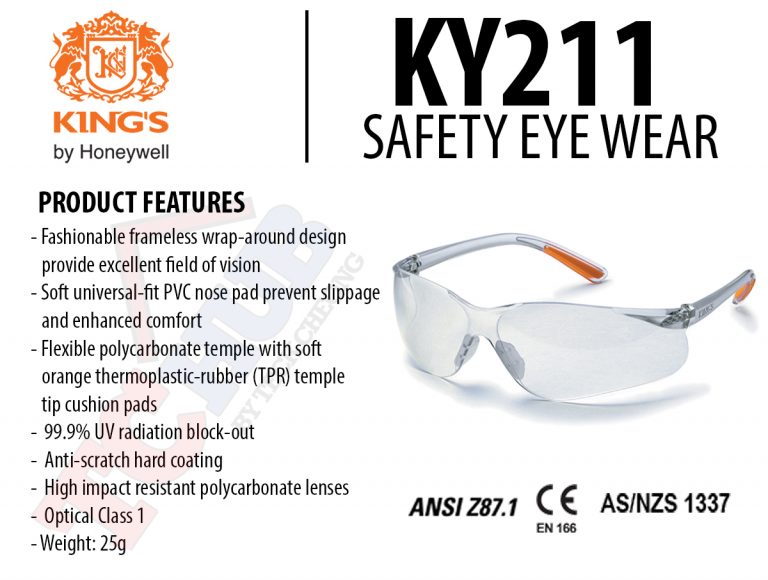
- EN 166 Standard (Europe): This is one of the most widely used standards, specifying requirements for impact resistance, scratch resistance, and light transmission. Protection levels include F (low-energy impact), B (medium-energy impact), and A (high-energy impact).
- ANSI Z87.1 Standard (United States): Issued by the American National Standards Institute, this standard requires safety goggles to pass rigorous tests for impact, dust, chemicals, and high temperatures. Compliant products are typically marked “Z87” or “Z87+” on the frame.
- AS/NZS 1337 Standard (Australia – New Zealand): Designed for industrial environments, this standard focuses on protection against UV radiation and small dust particles.
- TCVN Standard (Vietnam): Under TCVN 3579-81, safety goggles should meet basic requirements such as impact resistance, anti-fogging, good light transmission, and minimal image distortion.
 |
 |
Summary of Safety Goggles Standards
| Standard | Applicable Region | Protection Capabilities | Typical Applications |
| EN 166 | Europe | Protection against impact, dust, liquid droplets, and certain hazards depending on the type of goggles | Mechanical work, construction, manufacturing, laboratories |
| ANSI/ISEA Z87.1 | United States | Protection against impact, dust, liquid droplets, optical radiation, and specific hazards depending on the product | Mechanical work, construction, manufacturing, metalworking |
| AS/NZS 1337 | Australia – New Zealand | Protection against mechanical hazards and optical radiation depending on the protection level | Industrial work, construction, mining, metalworking |
| TCVN 3579-81 | Vietnam | Specifies technical requirements related to protection capabilities, optical properties, and durability within the scope of the standard | Construction sites, factories, manufacturing facilities, and workplaces in Vietnam |
Why Do Safety Goggles Standards Matter?
Safety goggles standards are an important basis for evaluating the level of protection, technical quality, and suitability of safety goggles for specific tasks and markets. Specifically:
- Indicate the level of protection: Standards specify the requirements that safety goggles must meet against hazards such as impact, dust, liquid droplets, UV radiation, and optical radiation.
- Help choose the right goggles for each task: Different working environments involve different hazards. Following the appropriate standards helps users select safety goggles with protection suitable for the specific job, from mechanical work and construction to chemical handling and welding.
- Help evaluate technical quality: Standards establish specific requirements and testing methods for durability, optical properties, impact resistance, and protective performance, providing a basis for evaluating the product.
- Meet market requirements: Compliance with the appropriate standards helps products meet the safety requirements of the relevant country or region and provides a basis for placing them on the market.

Tips for Choosing Safety Goggles That Meet the Right Standards
- Identify the hazards correctly: First, determine whether the job involves risks such as impact, dust, chemicals, UV radiation, or optical radiation so you can choose goggles with the appropriate level of protection.
- Choose the appropriate standard: Check the product against the standard applicable in the country or target market, such as EN 166 in Europe or ANSI/ISEA Z87.1 in the United States.
- Check the markings on the goggles: Markings on the lenses or frame can indicate the applicable standard, impact protection level, and protective features of the product.
- Check the product origin and documentation: Prioritize safety goggles with clear manufacturer information, technical documentation, and relevant certificates or test reports to verify the claimed standards.
- Do not choose based on “compliance” alone: Safety goggles may meet a standard but still be unsuitable for a specific hazard or task. Therefore, consider the standard, protection level, and intended use together.
Conclusion
Understanding safety goggles standards is an important step in choosing products that suit specific tasks and safety requirements in different markets. Hopefully, the information above will help you evaluate and select the right safety goggles with greater confidence. If you need advice on choosing suitable safety goggles, contact Thien Bang for product recommendations based on your specific requirements.
Contact Information:
- Hanoi Office: 0981.056.066 – 0961.203.270
- Ho Chi Minh City Office: 0966.831.477 – 0986.720.134
See at more:
How to Choose Safety Goggles for Every Job
Process For Selecting Safety Goggles For The Factory In Large Quantities
Safe UV Protective Goggles for Eye Protection at Work